
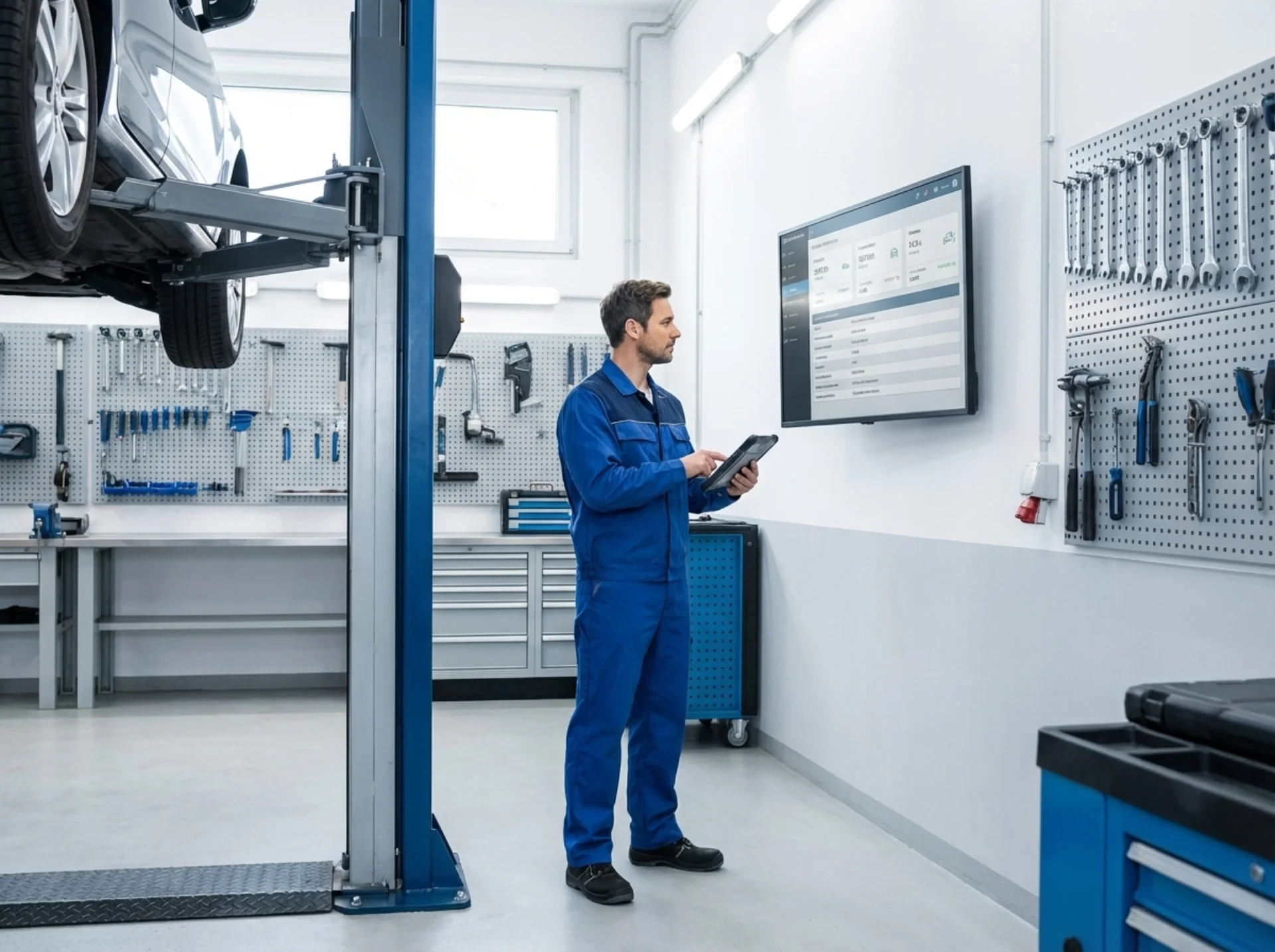
AI in manufacturing

AI for Manufacturing

AI for manufacturing helps reduce downtime, scrap and planning effort: models predict machine failures, inspect parts by camera and optimise detailed scheduling. Context Studios, an AI-native development studio in Berlin, develops such systems and integrates them into your existing PLC, MES and ERP systems – from a pilot on one machine to a full line rollout.

Concrete silos with a teal-painted conveyor bridge under an overcast sky – a visual metaphor for AI in industrial productionAI-generated image
Visual quality controlGoal: less scrapPredictive maintenanceOPC UA & MQTT integrated
  1. Workshop
  2. Setup
  3. Sprint
  4. Build & Support

Fixed price after scoping · proposal within 48 h

Last updated:

(01)

What is AI in manufacturing?

AI application area

AI in manufacturing refers to the use of machine learning, computer vision and predictive analytics in industrial production processes. Typical applications are predictive maintenance, visual quality control, intelligent production planning and digital twins. The decisive factor is integration with operational technology – PLCs, SCADA and protocols such as OPC UA or MQTT.

Specialisation
Predictive maintenance, quality control, production planning, digital twin
Technologies
PyTorch, YOLO, TensorFlow Lite, OPC UA, MQTT, Apache Kafka
Target group
Manufacturers, automotive suppliers, mechanical engineering, pharma, food
Project duration
Typically 6–10 weeks for a pilot machine, 3–6 months for a line rollout
Compliance
ISO 9001, IATF 16949, IEC 62443, GMP (pharma), CE conformity

Computer vision developmentAI predictive analyticsAI data analysisAI for enterpriseMachine learning development

(02)

Where does AI help in manufacturing?

Less downtime, less scrap, more flexibility

(01)

Predictive maintenance

Machine learning models analyse vibration, temperature, power consumption and acoustic signals from your machines in real time. Predicting failures early enables planned maintenance instead of unplanned downtime. Goal: noticeably less downtime.

(02)

Automated quality control

Computer vision detects surface defects, dimensional deviations and assembly errors with high accuracy. Real-time inspection on conveyors and assembly lines replaces sample-based checks with complete inspection of every part at line speed.

(03)

Intelligent production planning

AI-supported detailed scheduling optimises sequence, machine allocation and material flow, taking changeover times, delivery dates and capacity bottlenecks into account. Real-time adjustment to disruptions or rush orders keeps the production plan optimised.

(04)

Process optimisation with a digital twin

Digital twins of your production plant enable what-if simulations without interrupting production. Process parameters such as temperature, pressure and speed are optimised through AI-driven experiments on the virtual model.

(05)

Energy management

Machine learning identifies energy guzzlers and optimises energy consumption across the entire production process. Predictive load management reduces peak loads and energy costs without production losses.

(06)

OT/IT data integration

Seamless connection of machine controls (PLC, SCADA) with IT systems (MES, ERP). Industrial protocols such as OPC UA, MQTT and Modbus are merged into unified data pipelines — the foundation for every AI application in production.

Frequently asked questions: AI in manufacturing

(01)How is AI integrated into existing production equipment?
Integration takes place via industrial protocols such as OPC UA, MQTT or Modbus. AI systems read machine data from PLCs and SCADA systems without changing the existing automation. For computer vision, we install industrial cameras at suitable positions on the line. Results flow back into MES or ERP via interfaces, so your staff keep working in familiar systems.
(02)Does AI slow down the production process?
Usually not. For time-critical applications we rely on edge computing, for example with NVIDIA Jetson or Intel OpenVINO: data is processed directly at the machine without a detour through the network. We derive the required inference time from your production cycle and test it in the pilot before the system goes into live operation.
(03)What data does predictive maintenance need?
The basis is time-series data from sensors such as vibration, temperature, power consumption or pressure. Historical maintenance logs and failure reports are also helpful. How much history a first predictive model needs depends on the machine and how often it fails; a few months are often enough. Accuracy improves as data grows, so we plan retraining from the start.
(04)Does computer vision work in difficult lighting conditions?
Yes. We use special industrial lighting such as LED ring lights or strip lights and train the models on different lighting situations. Domain randomisation during training makes the AI robust against fluctuations. Hyperspectral or infrared cameras extend the possibilities for special requirements. In the pilot, we test specifically under the real conditions of your shop floor before the system goes live.
(05)Can AI quality control be certified?
We develop in line with the requirements of relevant standards, such as IATF 16949 for automotive, GMP for pharma or IFS/BRC for food. We validate the AI inspection systems with documented test protocols, measurement system analyses (MSA) and statistical process control (SPC). This gives you the evidence you need for audits and for approval by your quality assurance team.
(06)What does an AI pilot project in manufacturing cost?
Costs depend on the equipment, the data situation and the integration effort; typical components are sensors, data infrastructure, model training and integration. Rolling out to further machines is usually cheaper and faster than the pilot thanks to transfer learning. Fixed price after scoping, proposal within 48 hours. A fixed-price workshop in which we prioritise use cases is a good way to start.
(07)Can we adapt and retrain the AI models ourselves?
Yes. We implement MLOps pipelines with automated retraining and model management. Your team can label new training data and update models via a dashboard. For complex adjustments, we offer training and, if you wish, support by agreement. This keeps the knowledge about your processes in-house, and you do not depend permanently on external help.
(08)How safe are AI systems in production?
Safety has top priority. AI systems act as assistants: they make recommendations but do not take safety-critical decisions without human approval. IT security follows IEC 62443 with network segmentation, encrypted communication and access control. In addition, we log every recommendation and every approval so that decisions remain traceable at all times.
(09)Does the AI also work for batch size one?
Yes, with the right approaches. Transfer learning and few-shot learning make it possible to adapt AI models to new product variants with just a few examples. For quality control, we use anomaly detection that works without product-specific defect patterns. This makes AI worthwhile even in variant manufacturing with frequently changing products and small quantities.
(03)

Production AI technologies

(01)

AI & ML

Anthropic ClaudeOpenAI GPTGoogle GeminiOpen-Source LLMs (Llama, Qwen, DeepSeek, Mistral)ConvexRAG & Vector DBs (Pinecone, Weaviate)MCP (Model Context Protocol)Hugging Face TransformersComputer Vision (YOLO, SAM)ElevenLabs (Voice AI)Google Veo (Video AI)
(02)

Web & Mobile

Next.js 16 & React 19TypeScriptReact Native & ExpoTailwind CSS v4Shadcn/uiVercel Edge Runtime
(03)

Backend & Data

Node.js & Hono (Edge)PythonPostgreSQL & SupabaseConvex (Real-Time DB)RedistRPC & GraphQLOpenAPI 3.1
(04)

DevOps & Infrastructure

Vercel & AWSDocker & KubernetesCI/CD-Pipelines (GitHub Actions)OpenTelemetry & GrafanaLangfuse (LLM Monitoring)
(04)

Production AI by industry

Automotive suppliers

Optical inspection of body parts, predictive maintenance of presses and robots, and real-time quality control at line speed. IATF 16949-compliant documentation of all AI-supported inspection processes.

Mechanical engineering

Condition monitoring for machine tools, AI-optimised CNC programmes and automated first article inspection. Predictive models for tool wear help reduce unplanned tool changes.

Pharmaceutical production

GMP-compliant process monitoring, batch optimisation and real-time release. AI monitors critical process parameters and detects deviations before they affect product quality.
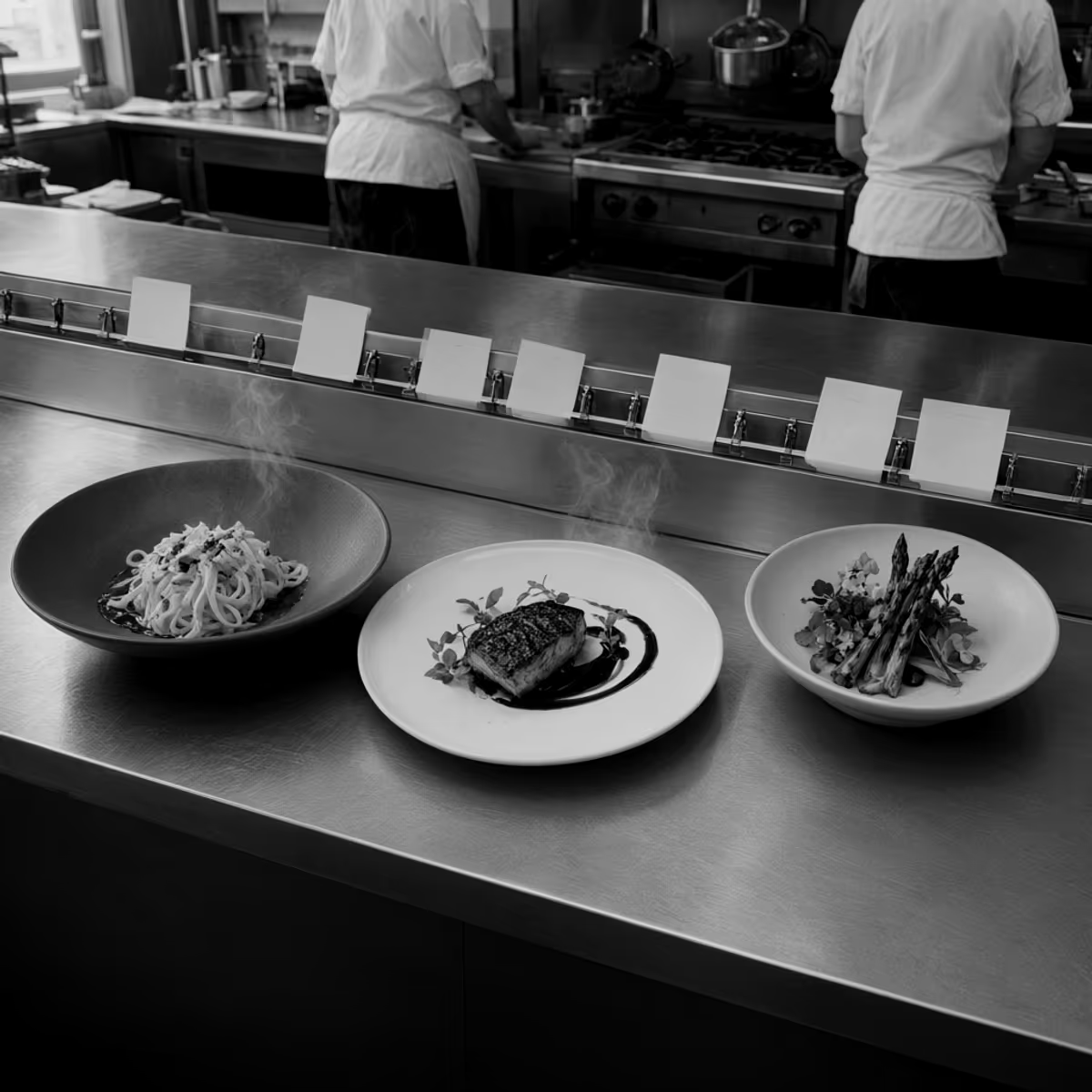
Food production

Foreign body detection, shelf-life prediction and AI-driven recipe optimisation. Computer vision checks packaging integrity and labelling completely, even on fast-running lines.
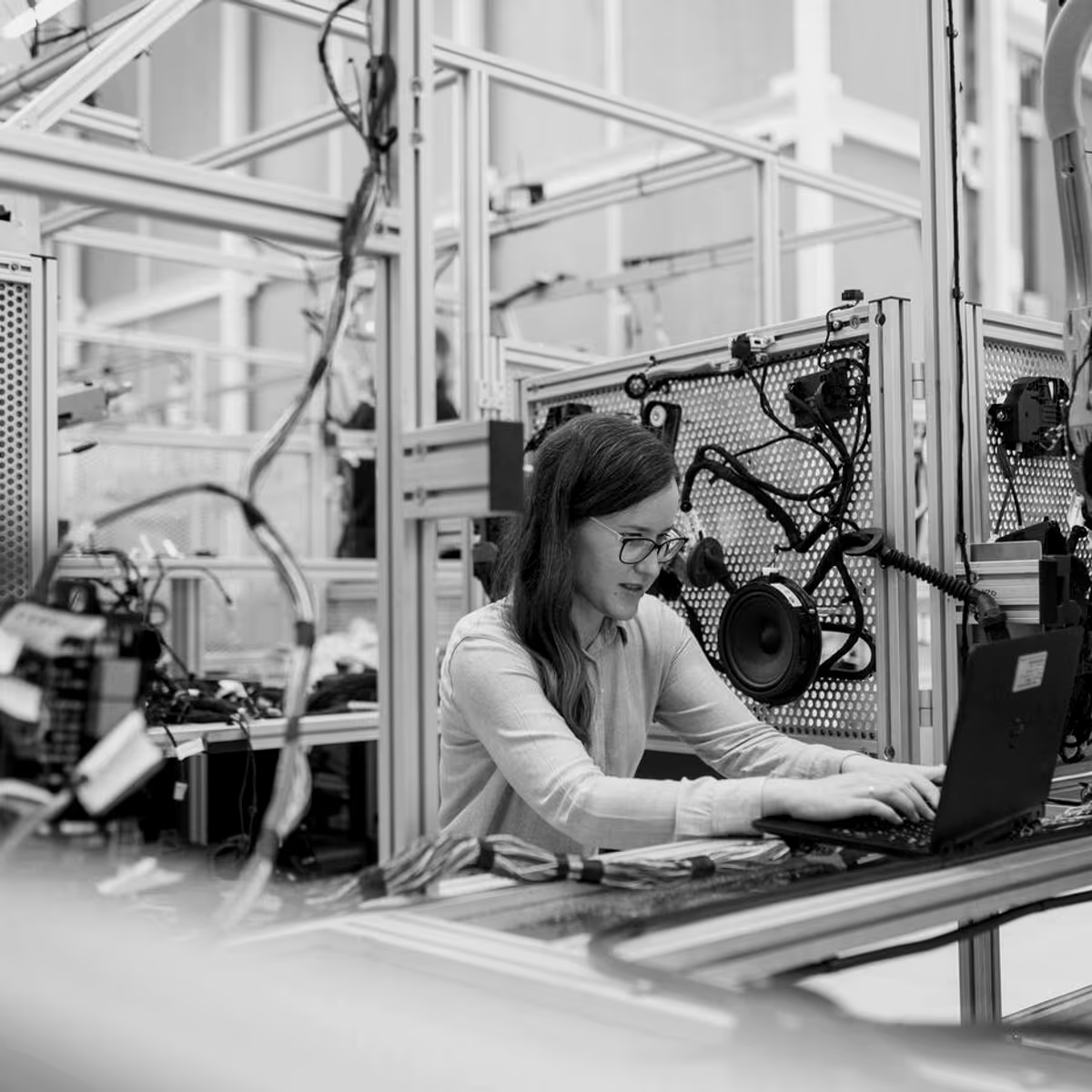
Electronics manufacturing

Automated optical inspection (AOI) of printed circuit boards, solder joint inspection and component verification. AI reliably detects subtle defects such as cold solder joints, bridging and missing components.

Plastics & chemicals

Process parameter optimisation for injection moulding and extrusion, real-time viscosity control and AI-supported recipe development. Predictive models minimise scrap and energy consumption at the same time.

(05)

Example projects

Examples we can build for you

Mechanical engineering

Predictive maintenance for machine tools

A model that evaluates sensor data from spindles and drives, detects wear early and suggests maintenance windows before unplanned downtime occurs.

Early wear detection · Planned maintenance · Connected via OPC UA
Automotive suppliers

Visual quality control on the line

A computer vision system that detects surface defects and dimensional deviations at line speed and automatically rejects faulty parts.

Every part inspected · Edge inference · Documented inspection records
Production planning

AI assistant for detailed scheduling

A planning assistant that takes orders, changeover times and capacities into account, suggests sequences and recalculates the plan when disruptions occur – approval stays with your planners.

Less changeover effort · Responds to disruptions · Human approval
(06)

AI for manufacturing — consultation in Berlin

Founder AI-native since
2024
Email
info [at] contextstudios [dot] ai
(07)

How is AI for your production built?

  1. (01)

    Consultation

    Free 30-minute initial call via video. We get to know your manufacturing, identify AI potential on your equipment and give you a first assessment of feasibility and timeline.

    Day 1
  2. (02)

    Proposal & planning

    You receive a written proposal with scope, timeline and fixed price – including a plan for sensors, data connection and the pilot machine.

    Days 2–3
  3. (03)

    AI-accelerated development

    Agile development with weekly demos. Goal: a working pilot in about 4 weeks, with production-ready code, connected machine data and automated tests.

    Weeks 1–4
  4. (04)

    Launch & support

    Production deployment with complete documentation and 30 days of free bug fixing from final delivery. Rollout to further machines, maintenance and further development by agreement.

    Week 4+

Optimise manufacturing with AI

Discuss in a 30-minute call directly with the founder how AI can make your production more efficient.