

Logistics AI from Berlin

AI for Logistics

AI for logistics plans routes, forecasts demand, controls inventory and predicts delivery times, so that freight forwarders, retailers and fulfilment providers cut costs and deliver more reliably. Context Studios, an AI-native development studio in Berlin, builds such systems and connects them to your WMS and TMS landscape.

Container cranes above stacked containers in a port, one container teal, under an overcast skyAI-generated image
Route optimisationDemand forecastingReal-time trackingIntegration with WMS and TMS
  1. Workshop
  2. Setup
  3. Sprint
  4. Build & Support

Fixed price after scoping · proposal within 48 h

Last updated:

(01)

What is AI for logistics?

AI application area

AI for logistics combines machine learning, operations research and computer vision to optimise the supply chain, from demand forecasting and warehouse management to route planning and the last mile. It also includes early warning systems that detect supply chain risks and suggest alternatives.

Specialisation
Route optimisation, demand forecasting, warehouse management, shipment tracking
Technologies
OR-Tools, Prophet, TensorFlow, Apache Kafka, Apache Airflow, Redis
Target group
Freight forwarders, logistics providers, retailers, fulfilment providers
Project duration
Single module typically 4–8 weeks, platform 3–6 months
Compliance
ISO 28000, AEO, GDPR, ADR (dangerous goods), customs regulations

AI predictive analyticsAI data analysisAI workflow automationComputer vision development

(02)

Which AI solutions exist for logistics?

Faster delivery, lower costs, greater resilience

(01)

Smart route optimisation

Route planning takes traffic, weather, time windows and vehicle capacities into account in real time. Dynamic re-planning during disruptions and prioritisation by customer requirements lower transport costs.

(02)

Demand forecasting

Machine learning models forecast demand at item level, taking into account seasonality, promotions, weather and market trends. More accurate forecasts reduce overstock and stock-outs.

(03)

AI-driven warehouse management

Optimised slotting, picking sequences and predictive replenishment: the models learn from historical movement data and improve warehouse utilisation.

(04)

Supply chain resilience

Early warning systems assess suppliers, monitor risks and identify alternative sourcing routes, so bottlenecks are spotted earlier and countermeasures taken in time.

(05)

Computer vision for quality control

Cameras detect damage to parcels and loads, read barcodes and QR codes and measure volume. Image analysis on conveyors and loading docks reduces manual checks.

(06)

Real-time tracking & delivery prediction

Arrival times are predicted from GPS data, traffic and historical delivery data; customers are informed proactively about delays with updated times.

(03)

How does a logistics AI project work?

  1. (01)

    Initial call

    A free 30-minute video call with Michael Kerkhoff. We get to know your project, assess where AI adds value and give you a first estimate of feasibility, effort and timeframe.

    Step 1
  2. (02)

    Proposal & planning

    A detailed feature breakdown, a technical architecture plan and a written proposal covering scope, schedule and a fixed price.

    Step 2
  3. (03)

    AI-accelerated development

    Agile development with weekly demos and production-ready code backed by automated tests. Goal: a working MVP in about 4 weeks.

    Step 3
  4. (04)

    Launch & operation

    Production deployment with complete documentation and handover. 30 days of free bug fixing from final delivery; maintenance and further development by agreement.

    Step 4

Frequently asked questions about logistics AI

(01)How much can we save with logistics AI?
Typical levers are lower transport costs through route optimisation, less overstock thanks to better forecasts and more efficient warehouse processes. The concrete savings potential depends on your starting point, data quality and the modules chosen. We estimate it together during scoping using your own figures rather than blanket promises.
(02)Does the AI also work during unforeseeable events?
Yes, that is where it is particularly useful. Resilience models detect patterns that point to disruptions, such as port congestion, extreme weather or supplier problems. During acute events the system re-plans routes and inventory dynamically and shows dispatchers options for action, while the final decision stays with people.
(03)Which data does logistics AI need?
The basis is historical order and delivery data, master data on items and locations, and current inventory data. For route optimisation, GPS data and traffic information are added. External data such as weather, public holidays or events further improve forecast quality. We check at the start which data is available and usable.
(04)Can the AI be integrated into our existing WMS or TMS?
Yes. We integrate via APIs with common warehouse and transport management systems such as SAP TM, Oracle TMS, Blue Yonder or Manhattan as well as custom systems. The AI complements your existing processes rather than replacing them, and delivers suggestions where dispatchers and warehouse teams already work.
(05)How quickly can we see first results?
A pilot module, for example demand forecasting for one product category, is typically ready for use after 4–8 weeks. In the following pilot phase we compare the results with your previous processes so that you decide on the basis of real data whether and how to roll out the module.
(06)Can the solution scale to international sites?
Yes. Our architectures are designed for operation across several regions: different time zones, rules such as tolls, driving times or customs, different carriers and local infrastructure. Scaling to new markets mainly requires connecting local data sources and adapting to country-specific requirements.
(07)How does the AI handle seasonality?
Our models recognise seasonal patterns such as the Christmas season, holidays, Black Friday or local events and learn them from your data. By combining several forecasting models, known as ensembles, we achieve stable forecasts even in highly seasonal industries and show the uncertainty of every prediction.
(08)How much does logistics AI cost?
Costs depend on the modules chosen, your data and the integrations into your systems; demand forecasting for one site is built much faster than a platform for an entire network. Fixed price after scoping, proposal within 48 hours. A workshop is a good way to start and prioritise use cases.
(09)Do we need IoT sensors for logistics AI?
Not necessarily. Many applications such as route optimisation and demand forecasting work with existing data from ERP, WMS and TMS. IoT sensors expand the possibilities considerably, for example with real-time location data, temperature monitoring in the cold chain and condition monitoring of vehicles and equipment.
(04)

Technology stack for logistics AI

(01)

AI & ML

Google OR-Tools (route planning)Prophet, LightGBM & TensorFlow (forecasting)YOLO & OpenCV (image recognition)Apache Kafka & AirflowAnthropic Claude & OpenAI GPT (documents, communication)Redis & PostgreSQLWMS/TMS connectors
(02)

Web & Mobile

Next.js & ReactTypeScriptReact Native & ExpoTailwind CSSshadcn/uiVercel Edge Runtime
(03)

Backend & Data

Node.js & HonoPythonPostgreSQL & SupabaseConvex (Real-Time DB)RedistRPC & GraphQLOpenAPI
(04)

DevOps & Infrastructure

Vercel & AWSDocker & KubernetesCI/CD (GitHub Actions)OpenTelemetry & GrafanaLangfuse (LLM Monitoring)
(05)

Logistics AI by segment

Courier, express & parcel

Route optimisation for many daily stops, dynamic delivery windows and models that help reduce failed delivery attempts.

Freight forwarding & long haul

Load optimisation, freight cost forecasting and multimodal route planning for better fleet utilisation across road, rail and water.

Warehousing & fulfilment

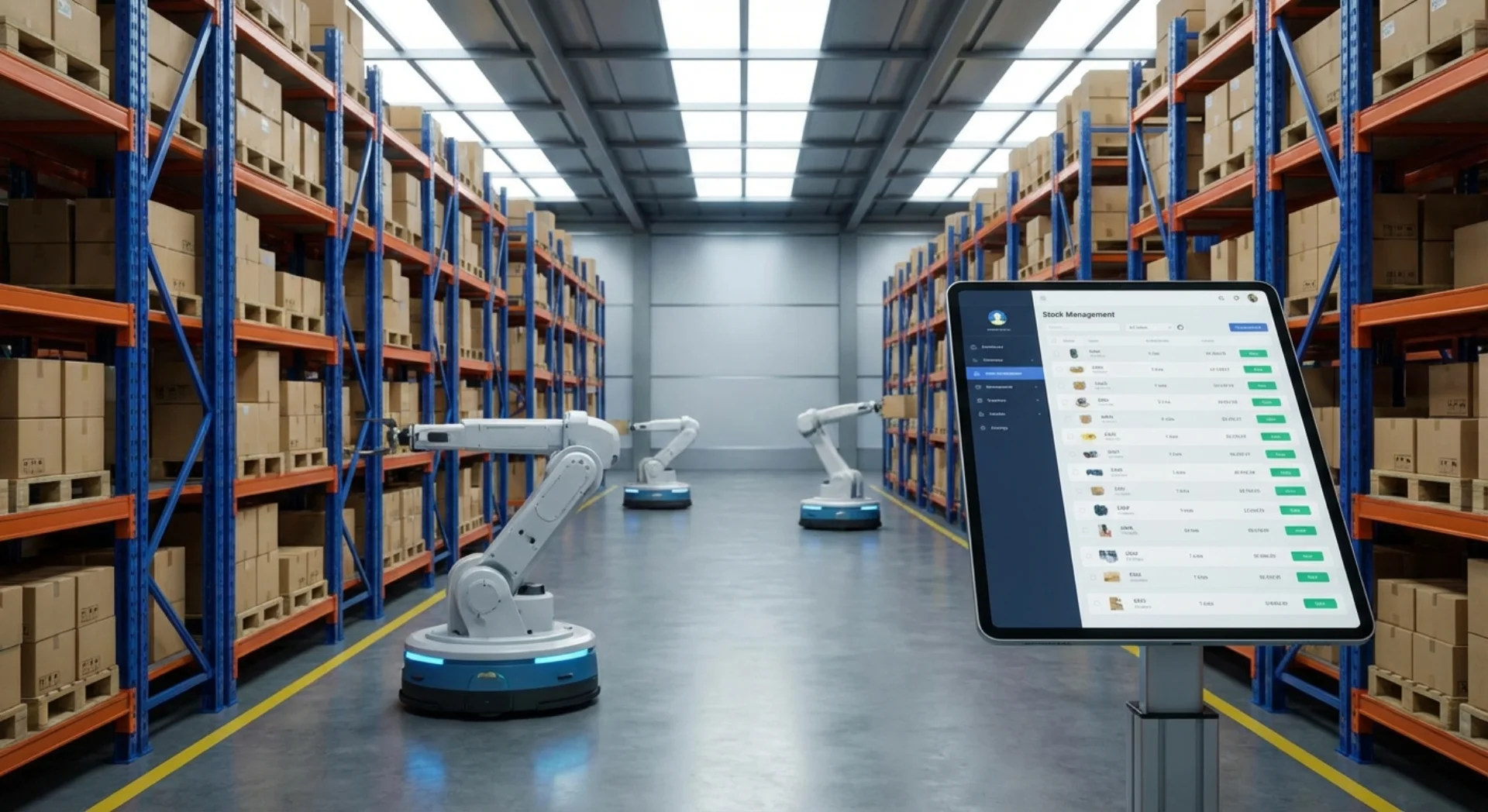
Optimised pick paths, automated inventory management and predictive replenishment, with the goal of handling more orders with fewer errors.
Supply chain management

Transparency across all tiers, supplier risk assessment and inventory optimisation that makes bottlenecks visible early.

Cold chain & pharma logistics

IoT temperature monitoring, predictive cold chain analysis and GDP-compliant shipment tracking that flags deviations early.

E-commerce logistics

Dynamic shipping cost calculation, return forecasts and automatic carrier selection balancing speed, cost and customer satisfaction.

(06)

Logistics AI: example projects

Examples we can build for you

Retail

Demand forecasting for a wholesaler

A forecasting model predicts demand per item and location and suggests order quantities that buyers review and approve.

Forecast per item and location · Human approval · Goal: fewer stock-outs
Freight forwarding

Dynamic route planning

An optimiser plans routes under time windows and capacities and adjusts them automatically during traffic jams or breakdowns.

Real-time re-planning · TMS integration · Goal: lower transport costs
Fulfilment

Damage detection at the loading dock

Cameras at the loading dock detect damaged parcels and document them automatically with a photo in the warehouse management system.

Image recognition · Automatic documentation · WMS integration
(07)

Logistics AI: consulting in Berlin

Founder AI-native since
2024
Email
info [at] contextstudios [dot] ai

Optimise logistics with AI

Find out in 30 minutes how AI can make your supply chain more efficient and more resilient.