Computer vision from Berlin

Computer Vision Development

Computer vision development means teaching software to see: cameras and models detect objects, read documents and spot defects automatically. Context Studios, an AI-native development studio in Berlin, builds these systems with YOLO, SAM, OpenCV and multimodal models, from data preparation to deployment in production or on edge devices.

Inspection gantry with industrial cameras above a conveyor belt in a bright factory hall, photographed from belowAI-generated image
AI-native development studio in BerlinYOLO · SAM · OpenCV · PyTorchGDPR-compliant, edge or cloudFixed prices instead of hourly billing
  1. Workshop
  2. Setup
  3. Sprint
  4. Build & Support

Fixed price after scoping · proposal within 48 h

Last updated:

(01)

What is computer vision development?

AI technology

Computer vision development is the design, training and operation of systems that analyse images and video automatically. It covers object detection, image segmentation, text recognition (OCR) and video analytics. The goal is to automate visual inspection and data capture tasks reliably, traceably and at scale.

Specialisation
Object detection, OCR, quality inspection, image segmentation, video analytics
Technologies
PyTorch, YOLO, SAM, OpenCV, TensorRT, ONNX Runtime
Target group
Manufacturing, logistics, healthcare, retail and any business with visual data
Project duration
Typically 6–16 weeks including data preparation and training
Compliance
GDPR (biometric data only with a legal basis), EU AI Act risk classes

Machine learning developmentAI image generationAI for manufacturingAI document processing

(02)

Which computer vision services do we offer?

From object detection to edge deployment, built in Berlin

(01)

Object detection (YOLO, multimodal models)

We implement object detection with YOLO, Faster R-CNN and multimodal models such as GPT or Gemini, for real-time tracking in production, logistics and retail, trained with PyTorch.

(02)

OCR & document digitisation

We build OCR systems with Tesseract, Google Cloud Vision and Azure Document Intelligence for document digitisation, invoice extraction and contract analysis, operated in a GDPR-compliant way.

(03)

Visual quality inspection

Models based on PyTorch and TensorFlow detect scratches, missing parts or assembly errors directly on the line, for manufacturing, pharma and the food industry.

(04)

Image segmentation (SAM, U-Net)

Pixel-accurate segmentation with SAM (Segment Anything Model) and U-Net for medical image analysis, satellite imagery, measurement and autonomous systems.

(05)

Real-time video analytics

Video analytics with YOLO, DeepSORT and OpenCV for traffic analysis, security applications and sports analytics, with a streaming pipeline built on Redis and FFmpeg.

(06)

Edge AI deployment

We bring vision models to edge devices with TensorFlow Lite, ONNX Runtime and NVIDIA Jetson: on-site inference without cloud dependency, ideal for GDPR-sensitive applications.

(03)

How does a computer vision project work?

  1. (01)

    Initial call

    A free 30-minute video call with Michael Kerkhoff. We get to know your project, assess where AI adds value and give you a first estimate of feasibility, effort and timeframe.

    Step 1
  2. (02)

    Proposal & planning

    A detailed feature breakdown, a technical architecture plan and a written proposal covering scope, schedule and a fixed price.

    Step 2
  3. (03)

    AI-accelerated development

    Agile development with weekly demos and production-ready code backed by automated tests. Goal: a working MVP in about 4 weeks.

    Step 3
  4. (04)

    Launch & operation

    Production deployment with complete documentation and handover. 30 days of free bug fixing from final delivery; maintenance and further development by agreement.

    Step 4

Frequently asked questions about computer vision development

(01)How much training data does a vision model need?
It depends on the task and the accuracy you need. For a first feasibility check, a few hundred well-annotated images are often enough, because pre-trained models only need to be adapted. High-precision quality inspection usually requires several thousand examples, including rare defects. We support you with data collection, annotation and augmentation.
(02)Does image recognition work in real time?
Yes. Modern detectors such as YOLO are designed for speed and process many frames per second on current GPUs; real time is also possible on edge devices such as NVIDIA Jetson. How fast your system will be depends on resolution, model size and hardware. We optimise with TensorRT and quantisation for your target platform.
(03)How much does it cost to develop an image processing system?
The effort depends on your data, the accuracy target, the hardware and how deeply the system is integrated; a simple classification is built much faster than a multi-stage real-time video analysis. That is why we define the scope in a scoping phase first. Fixed price after scoping, proposal within 48 hours. Our workshop format is also a good starting point.
(04)Can existing cameras and hardware be used?
In many cases, yes. Industrial cameras with GigE Vision or USB3 Vision can be integrated directly, and IP cameras or webcams can also be used. We check image quality, resolution and lighting at the site beforehand. Only if the footage is not good enough for the goal do we recommend targeted, cost-effective hardware adjustments.
(05)How does image recognition work in poor lighting?
We train models with augmented data under different lighting conditions and use infrared or multispectral cameras where necessary. In addition, controlled LED lighting at the inspection point can keep image quality consistent. This keeps recognition stable across shift changes, daylight and reflections.
(06)Can facial recognition be used in compliance with the GDPR?
Facial recognition is biometric data processing under Art. 9 GDPR and is only permitted with explicit consent or another narrow legal basis; the EU AI Act restricts it further. We advise on legally sound alternatives such as anonymised people counting, pose estimation or processing without storing images.
(07)Can a vision model be improved after deployment?
Yes. We set up continuous learning pipelines: uncertain predictions from operation are collected, reviewed and annotated and feed into regular retraining. Monitoring shows when conditions change, for example due to new products or cameras. This way the model keeps improving with real data from your operations.
(08)What is the difference between object detection and image segmentation?
Object detection finds objects in an image, marks them with a bounding box and assigns a class. Image segmentation assigns a class to every single pixel and therefore delivers exact contours. Segmentation is more precise and is used for measurement, medical image analysis or autonomous systems.
(09)Can vision models run on mobile devices?
Yes. With model compression, quantisation and frameworks such as Core ML or TensorFlow Lite, optimised models run directly on smartphones and tablets. Typical mobile applications are product recognition, barcode scanning, counting tasks and augmented reality features. The images do not have to leave the device, which simplifies data protection.
(10)How do you measure the quality of a vision model?
We use standard metrics: mAP (mean average precision) for object detection, IoU (intersection over union) for segmentation, and accuracy and F1 score for classification. We also measure inference time, false positive rate and robustness under real conditions at the site before a model goes into production.
(04)

Technology stack for computer vision

(01)

AI & ML

PyTorch & TensorFlowYOLO & Faster R-CNNSAM (Segment Anything) & U-NetOpenCV & scikit-imageTensorRT & ONNX RuntimeMultimodal models (GPT, Gemini, Claude)Hugging Face Transformers
(02)

Web & Mobile

Next.js & ReactTypeScriptReact Native & ExpoTailwind CSSshadcn/uiVercel Edge Runtime
(03)

Backend & Data

Node.js & HonoPythonPostgreSQL & SupabaseConvex (Real-Time DB)RedistRPC & GraphQLOpenAPI
(04)

DevOps & Infrastructure

Vercel & AWSDocker & KubernetesCI/CD (GitHub Actions)OpenTelemetry & GrafanaLangfuse (LLM Monitoring)
(05)

Use cases by industry

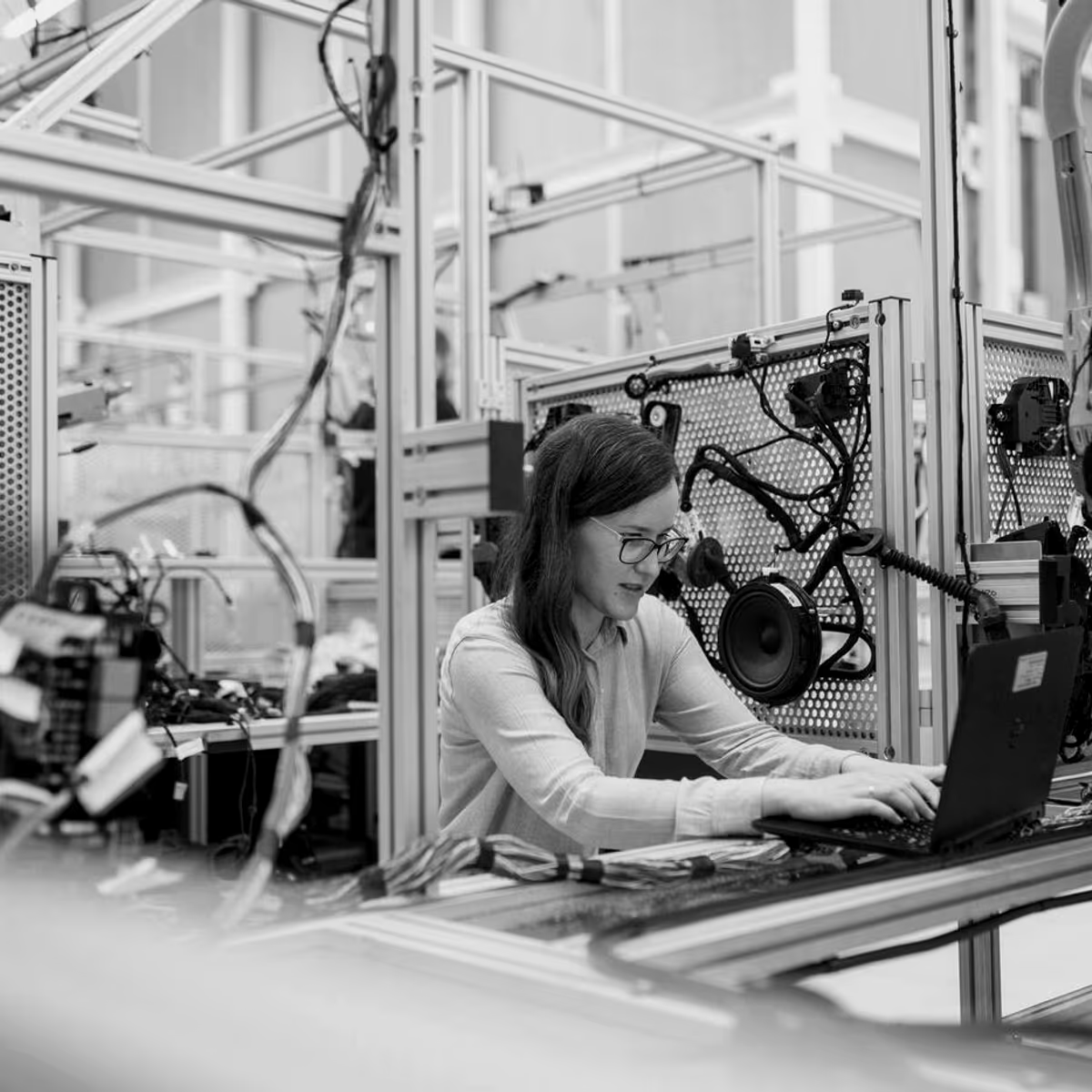
Manufacturing & production

Automated quality inspection on the line with cameras and AI models that detect scratches, missing parts or assembly errors.
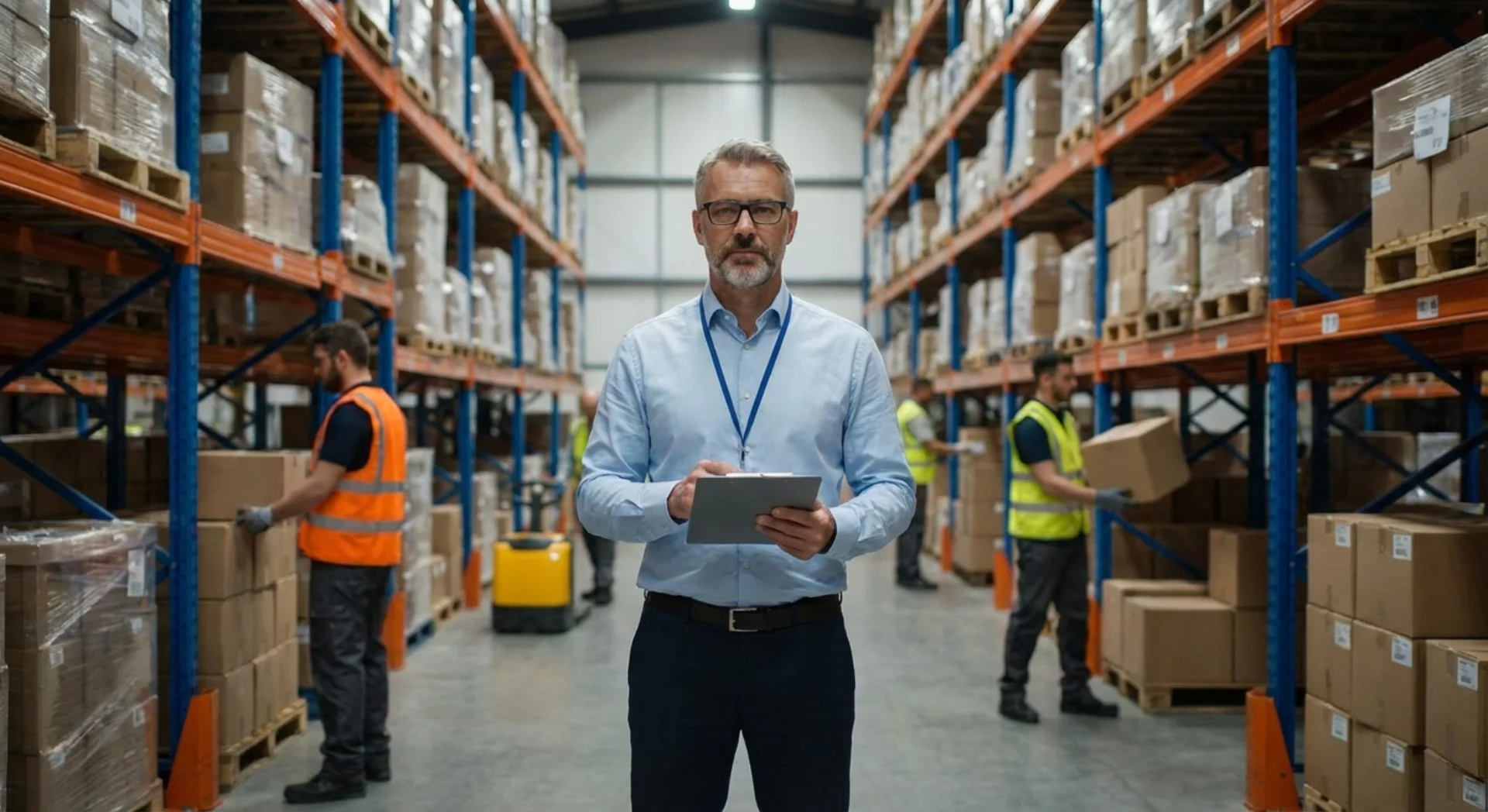
Logistics & warehousing

Parcel identification, barcode and QR code recognition, load checks and storage optimisation, integrated into warehouse management systems.

Healthcare & diagnostics

Support in reviewing X-ray, CT, MRI and pathology images through automated anomaly detection; diagnosis stays with physicians.
Retail

Shelf monitoring, automated stock recognition, anonymised footfall analysis and checkout systems that identify products visually.

Agriculture

Drone-based field analysis, crop detection and pest identification by camera, the basis for precision farming.
Construction & real estate

Construction progress monitoring by image comparison, defect capture during inspections and 3D reconstruction from photos and video for digital twins.

(06)

Computer vision: example projects

Examples we can build for you

Manufacturing

Final visual inspection on the production line

A camera system checks every part at the end of the line for scratches, deformations and missing components and reports anomalies directly to the MES.

Goal: less scrap · Every part inspected · Edge inference
Administration

Document capture with OCR

A pipeline recognises delivery notes and invoices, extracts fields via OCR and passes validated data to the ERP system.

Automated field extraction · Human review when uncertain · GDPR-compliant
Logistics

Stock recognition in the warehouse

Cameras and object detection capture pallets and storage locations, compare them with the warehouse management system and flag discrepancies.

Continuous stocktaking · Barcode and object detection · WMS integration
(07)

Computer vision: consulting in Berlin

Founder AI-native since
2024
Email
info [at] contextstudios [dot] ai

Visual intelligence for your business

From quality inspection to document digitisation: talk to us for 30 minutes about your use case.