
Enterprise AI

AI for Enterprise

AI for enterprise means bringing artificial intelligence into the core processes of large organisations securely, compliantly and at scale: integrated with SAP, Salesforce and Microsoft 365, with governance and human oversight. Context Studios, an AI-native development studio in Berlin, supports you from proof of concept to rollout.

Group of office high-rises, one with a teal-tinted glass facade, photographed from below under an overcast skyAI-generated image
Integration with SAP, Salesforce, Microsoft 365Security aligned with ISO 27001EU AI Act and GDPRCloud, hybrid or on-premise
  1. Workshop
  2. Setup
  3. Sprint
  4. Build & Support

Fixed price after scoping · proposal within 48 h

Last updated:

(01)

What does enterprise AI mean?

AI application area

Enterprise AI is the systematic use of artificial intelligence in large organisations to improve business processes and decisions. Unlike individual AI tools, it is integrated into existing systems, centrally governed, monitored and documented, with clear rules for security, data protection and accountability.

Specialisation
Enterprise integration, AI governance, organisation-wide scaling
Technologies
Azure OpenAI, AWS Bedrock, SAP AI Core, Convex, Kubernetes
Target group
Corporations, larger SMEs, public administration
Project duration
PoC typically 4–8 weeks, pilot 3–6 months, rollout 6–12 months
Compliance
GDPR, EU AI Act, security aligned with ISO 27001, industry-specific regulation

AI integrationAI platform developmentEnterprise AI developmentAI for startups

(02)

Which enterprise AI solutions do we offer?

Secure, scalable AI systems for business-critical processes

(01)

Integration with existing systems

Connecting AI capabilities to SAP, Salesforce, Oracle and Microsoft systems via existing APIs and data formats, without disrupting workflows or forcing a migration.

(02)

Enterprise-grade security

A multi-layered security architecture with encryption, role-based access and audit trails, aligned with ISO 27001 and the GDPR and suitable for regulated industries such as finance and pharma.

(03)

Organisation-wide scaling

From a pilot area to a group-wide rollout: architectures for many concurrent users, several regions and multilingual interfaces, with consistent performance and central management.

(04)

Breaking down data silos

Data pipelines connect scattered departmental data into a shared knowledge base. RAG systems and semantic search make company knowledge accessible, from contracts to product documentation, with an access concept.

(05)

AI governance & monitoring

A central dashboard for all AI systems with real-time monitoring, cost control, bias checks and compliance reporting, plus alerts on anomalies and audit logs for regulatory requirements.

(06)

Change management & training

Successful adoption takes more than technology: training for each user group, AI contacts in the departments and clear interfaces encourage acceptance rather than resistance.

(03)

How does an enterprise AI project work?

  1. (01)

    Initial call

    A free 30-minute video call with Michael Kerkhoff. We get to know your project, assess where AI adds value and give you a first estimate of feasibility, effort and timeframe.

    Step 1
  2. (02)

    Proposal & planning

    A detailed feature breakdown, a technical architecture plan and a written proposal covering scope, schedule and a fixed price.

    Step 2
  3. (03)

    AI-accelerated development

    Agile development with weekly demos and production-ready code backed by automated tests. Goal: a working MVP in about 4 weeks.

    Step 3
  4. (04)

    Launch & operation

    Production deployment with complete documentation and handover. 30 days of free bug fixing from final delivery; maintenance and further development by agreement.

    Step 4

Frequently asked questions about enterprise AI

(01)How does AI integrate into our existing IT landscape?
We develop integration layers that connect to your existing systems via APIs and standard interfaces, such as SAP, Salesforce, Microsoft 365 or Oracle. Replacing existing systems is not necessary. We take over roles and permissions from your identity management, so the AI only sees what users are allowed to see.
(02)Which security standards do your enterprise AI solutions meet?
We design systems to the requirements of the GDPR and align them with ISO 27001 and BSI IT-Grundschutz; for regulated industries we also take into account requirements such as GxP or financial supervisory rules. Encryption, role-based access, logging and data storage in the EU are standard in every architecture.
(03)How long does a typical enterprise AI project take?
A proof of concept typically takes 4–8 weeks, a pilot project usually 3–6 months. The organisation-wide rollout depends on complexity and the number of sites. We recommend a phased approach with early, measurable results, so decisions are based on real data rather than assumptions.
(04)How much does enterprise AI development cost?
Costs depend on scope, integration effort, security and compliance requirements and the number of users; a proof of concept is much smaller than a group-wide rollout. Fixed price after scoping, proposal within 48 hours. A Strategy Day at a fixed price is a good way to prioritise use cases.
(05)Can your AI solutions run on-premise?
Yes. We offer cloud, hybrid and on-premise deployments. For particularly sensitive data we combine local data processing with models via Azure OpenAI or AWS Bedrock in EU regions, or run open-source models entirely in your data centre. The choice depends on protection needs, cost and latency.
(06)How do you handle change management in large organisations?
We support the change in a structured way: AI contacts in the departments, training for different user groups, clear interfaces and regular measurement of usage. We involve the works council and data protection early. This creates acceptance and reliable usage figures instead of resistance and shadow IT.
(07)How do you ensure the quality of AI results?
With a multi-stage quality system: automated tests, human validation of critical results, ongoing monitoring of model quality and regular checks for bias. For each system we define target values for accuracy and response time and automatically trigger alerts when they are not met.
(08)Do you support compliance with the EU AI Act?
Yes. We classify your use case according to the risk levels of the EU AI Act, implement transparency and documentation obligations and build measures such as human oversight, logging and risk management directly into the system. This produces the technical documentation your compliance team needs for audits.
(09)How does the AI solution scale as usage grows?
Our enterprise architectures are based on container orchestration with Kubernetes and automatic scaling. The systems adapt to the load, so response times stay stable even at peaks. Caching, model routing and cost limits keep running costs under control; deployments across several regions are possible.
(10)Do you offer long-term maintenance and further development?
Yes. From final delivery, 30 days of free bug fixing apply; after that we offer maintenance and further development by agreement, with model updates, security patches, monitoring and strategic advice. We agree the scope, monitoring and review rhythm together with your IT department.
(04)

Technology stack for enterprise AI

(01)

AI & ML

Anthropic ClaudeOpenAI GPT & Azure OpenAIGoogle GeminiAWS BedrockSelf-hosted open-source LLMs (Llama, Mistral)RAG & vector databasesSAP and Salesforce connectorsKubernetes & auto-scaling
(02)

Web & Mobile

Next.js & ReactTypeScriptReact Native & ExpoTailwind CSSshadcn/uiVercel Edge Runtime
(03)

Backend & Data

Node.js & HonoPythonPostgreSQL & SupabaseConvex (Real-Time DB)RedistRPC & GraphQLOpenAPI
(04)

DevOps & Infrastructure

Vercel & AWSDocker & KubernetesCI/CD (GitHub Actions)OpenTelemetry & GrafanaLangfuse (LLM Monitoring)
(05)

Enterprise AI by industry

Financial services

Risk assessment, automated reporting, anti-money-laundering and personalised advice, with regulatory requirements such as MiFID II considered from the start.

Pharma & life sciences

Support in research and clinical trials and AI-assisted quality control, GxP-compliant with validation documentation.
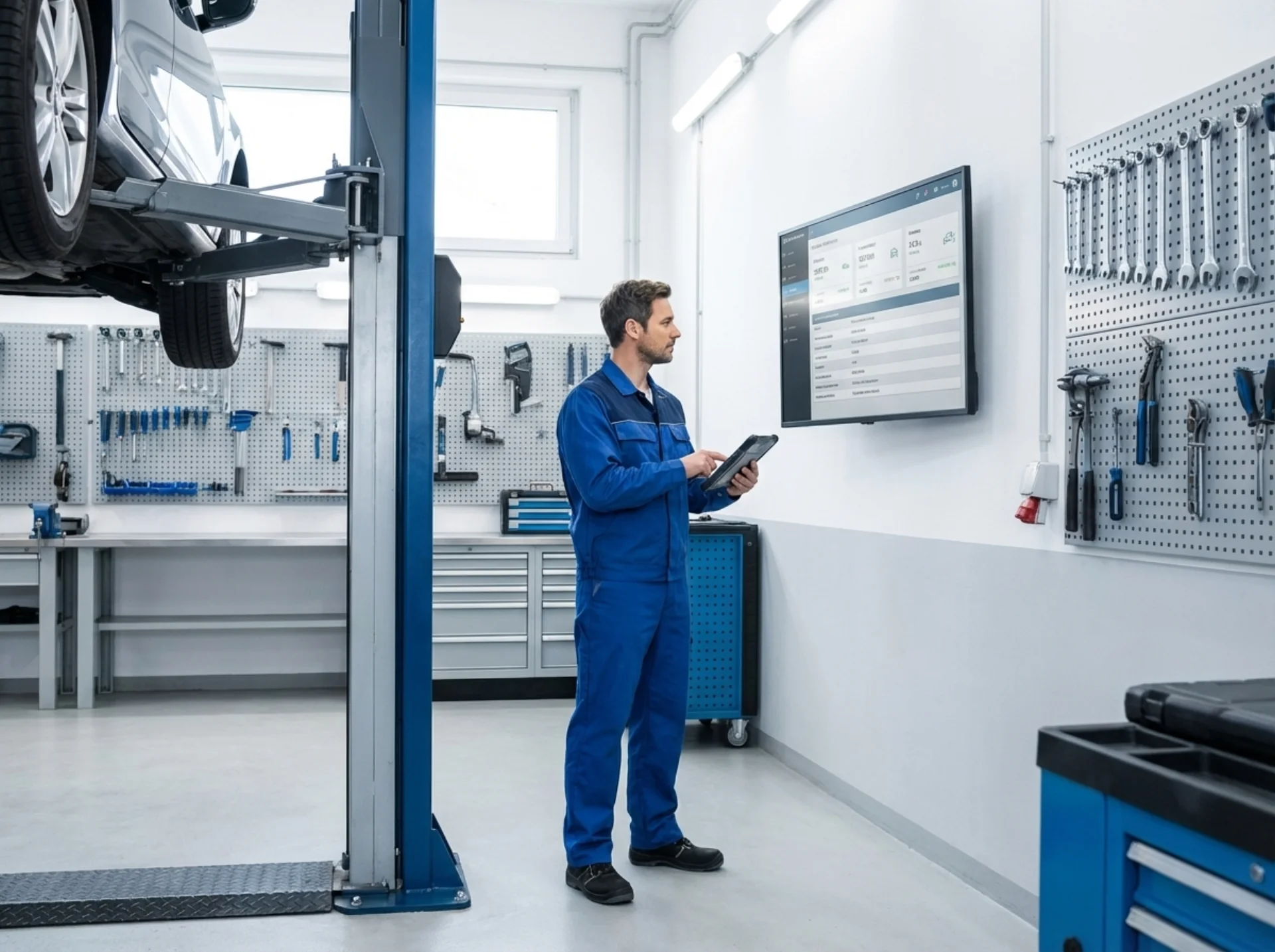
Automotive

Predictive maintenance, AI-assisted quality inspection and supply chain optimisation, integrated into MES and ERP systems.

Insurance

Automated claims handling, risk assessment and fraud detection with intelligent document analysis.

Energy & utilities

Load forecasting with machine learning, predictive maintenance of infrastructure and integration of renewable energy.

Public administration

Document processing, citizen communication via AI assistants and automated application processing, aligned with BSI IT-Grundschutz.

(06)

Enterprise AI: example projects

Examples we can build for you

Industry

Group-wide knowledge assistant

A RAG assistant answers questions from policies, manuals and contracts, takes over permissions from identity management and cites its sources.

Access concept from IAM · Source-based answers · Multilingual
Insurance

Claims handling with AI agents

Agents read claims, check documents for completeness and prepare decisions; claims handlers make the final decision.

Human oversight · Audit trail · Goal: shorter processing times
Corporate

AI governance platform

A central portal records all AI applications, classifies them under the EU AI Act and monitors cost, quality and usage.

EU AI Act classification · Cost tracking · Compliance reporting
(07)

Enterprise AI: consulting in Berlin

Founder AI-native since
2024
Email
info [at] contextstudios [dot] ai

Develop your enterprise AI strategy

Plan the introduction of AI in your organisation with us: structured, secure and with measurable goals. Start with a 30-minute call.