

From idea to AI product

AI Product Development

AI product development takes an idea to a market-ready product: it first checks demand, then builds a lean MVP with real users and only scales once the value is proven. Context Studios, an AI-native development studio in Berlin, combines product strategy, UX design for AI and production-ready engineering to get you there.

Wind turbine with a teal nacelle against an overcast sky, photographed from the base of the towerAI-generated image
Product-market fit methodologyLean startup meets AIGoal: MVP in about 4–6 weeksWork directly with the founder
  1. Workshop
  2. Setup
  3. Sprint
  4. Build & Support

Fixed price after scoping · proposal within 48 h

Last updated:

(01)

What is AI product development?

AI service

AI product development covers every step needed to bring a product with artificial intelligence at its core to market: demand validation, product strategy, UX design, technical implementation, business model and scaling. Unlike pure software development, what counts is not just working code but measurable value for paying customers.

Specialisation
AI product strategy, MVP development, product-market fit validation
Technologies
Claude, GPT, Next.js, Convex, analytics tools
Target group
Startups, innovation departments, corporate ventures, founders
Project duration
MVP typically 4–6 weeks, full product 8–16 weeks
Compliance
GDPR-compliant, EU AI Act risk classification, privacy by design

MVP developmentAI prototype developmentAI SaaS developmentAI app development

(02)

How are successful AI products built?

What sets product development apart from pure software development

(01)

Product strategy before code

Before we write a line of code, we test your product hypothesis: market analysis, competition and conversations with potential users show whether the product solves a real problem. A lack of product-market fit is a common reason products fail.

(02)

Lean MVP in about 4–6 weeks

Instead of developing in secret for months, we get your AI product in front of real users quickly. The MVP focuses on the core feature with the greatest value; where sensible, some steps are supported manually at first.

(03)

Data-driven product decisions

A/B tests, cohort analyses and usage patterns show which features create value. We measure not only usage but also the quality of AI results from the user's perspective.

(04)

User-centred AI design

AI products raise their own UX questions: how do you show uncertainty? How do you build trust in AI results? How do you handle errors? We design interfaces that make AI transparent and controllable.

(05)

Business model and pricing

We help you find the right pricing strategy, from freemium and usage-based pricing to enterprise licences, while taking ongoing model costs per user into account.

(06)

From MVP to scale

After validation we support scaling: architecture for growth, automated onboarding, self-service features and performance optimisation on a serverless foundation with Convex and Vercel.

(03)

How does developing an AI product work?

  1. (01)

    Initial call

    A free 30-minute video call with Michael Kerkhoff. We get to know your project, assess where AI adds value and give you a first estimate of feasibility, effort and timeframe.

    Step 1
  2. (02)

    Proposal & planning

    A detailed feature breakdown, a technical architecture plan and a written proposal covering scope, schedule and a fixed price.

    Step 2
  3. (03)

    AI-accelerated development

    Agile development with weekly demos and production-ready code backed by automated tests. Goal: a working MVP in about 4 weeks.

    Step 3
  4. (04)

    Launch & operation

    Production deployment with complete documentation and handover. 30 days of free bug fixing from final delivery; maintenance and further development by agreement.

    Step 4

Questions about building AI products

(01)What is the difference between AI product development and AI software development?
AI software development focuses on the technical implementation. Product development goes further: it also covers market analysis, user research, product strategy, UX design, pricing and go-to-market. The result is not just working software but a market-ready product with a clear value proposition and a viable business model.
(02)I have an AI idea but no technical team. Can you help?
Yes, that is exactly what we are here for, even if you come with a business idea and domain knowledge but no technical team. We handle the entire product development, from validation through design and development to launch. If you wish, we then help build an internal team to develop the product further.
(03)How do you check whether an AI product has market potential?
With a structured validation process: market and competitor analysis, interviews with potential customers, landing page tests and finally an MVP with real users. Each phase provides data for the next investment decision. That way you reduce risk step by step instead of betting everything on one big move.
(04)How much does it cost to develop an AI product?
Costs depend on scope, your data and the integrations. We always recommend a staged approach: validate first, then invest, for example starting with a Prototyping Sprint (2 days, €4,500). For the development itself: fixed price after scoping, proposal within 48 hours.
(05)Do you also help with funding the AI product?
We do not provide funding, but we help you prepare: technical sections for pitch decks, a working MVP as proof for investors and well-prepared usage data. A product that real users actually use is a strong argument in funding conversations.
(06)How do you protect my product idea?
On request we sign a confidentiality agreement before the project starts. For the product we develop, including source code, design and configurations, you receive the exclusive rights of use under section 5 of our terms. We do not reuse project-specific parts for other clients, and your data remains confidential.
(07)What happens after the MVP launch?
After launch the most important phase begins: learning and iterating. We analyse usage data together, collect feedback and prioritise the next features. Several iterations are usually needed before product-market fit becomes clearly visible. After that, scaling begins, with a focus on growth and efficiency.
(08)Can I develop the product further myself later on?
Yes, and we actively support the transition: helping to build your internal team, with detailed knowledge transfer sessions and thorough technical documentation. A proven path is to start together and build your own team after the validation phase, which then takes over the product.
(09)How do you choose the right AI models for my product?
Based on data: we systematically test models such as Claude, GPT, Gemini and open-source alternatives with your real use cases and assess quality, speed and cost. For products we often recommend a multi-model approach: powerful models for critical tasks and cheaper ones for standard operations.
(10)Do you also develop hardware-related AI products?
Our focus is on software AI products. For projects with IoT or embedded components, we work with specialised hardware partners: we take care of edge AI logic, cloud connectivity and the app, while the partner builds the physical device. This division of labour has proven itself for hybrid AI products.
(04)

Technology stack for AI products

(01)

AI & ML

Anthropic ClaudeOpenAI GPTGoogle GeminiOpen-source LLMs (Llama, Qwen, DeepSeek, Mistral)RAG & vector databases (pgvector, Pinecone, Weaviate)MCP (Model Context Protocol)Hugging Face Transformers
(02)

Web & Mobile

Next.js & ReactTypeScriptReact Native & ExpoTailwind CSSshadcn/uiVercel Edge Runtime
(03)

Backend & Data

Node.js & HonoPythonPostgreSQL & SupabaseConvex (Real-Time DB)RedistRPC & GraphQLOpenAPI
(04)

DevOps & Infrastructure

Vercel & AWSDocker & KubernetesCI/CD (GitHub Actions)OpenTelemetry & GrafanaLangfuse (LLM Monitoring)
(05)

AI products for different industries

B2B SaaS

AI-powered SaaS products such as CRM extensions, reporting platforms or industry tools, with product strategy, implementation and subscription-based pricing.

Deep tech & AI startups

From research project to market-ready product: technical innovation is turned into a usable product with a clear value proposition.

Corporate innovation

Innovation departments validate AI product ideas in short cycles and scale successful projects into the organisation.

Professional services

Consultants, agencies and service providers turn their expertise into scalable AI products such as knowledge platforms or analysis tools.

Marketplaces & platforms

Platforms with smart matching, automated quality assurance and personalised recommendations that improve with every interaction.
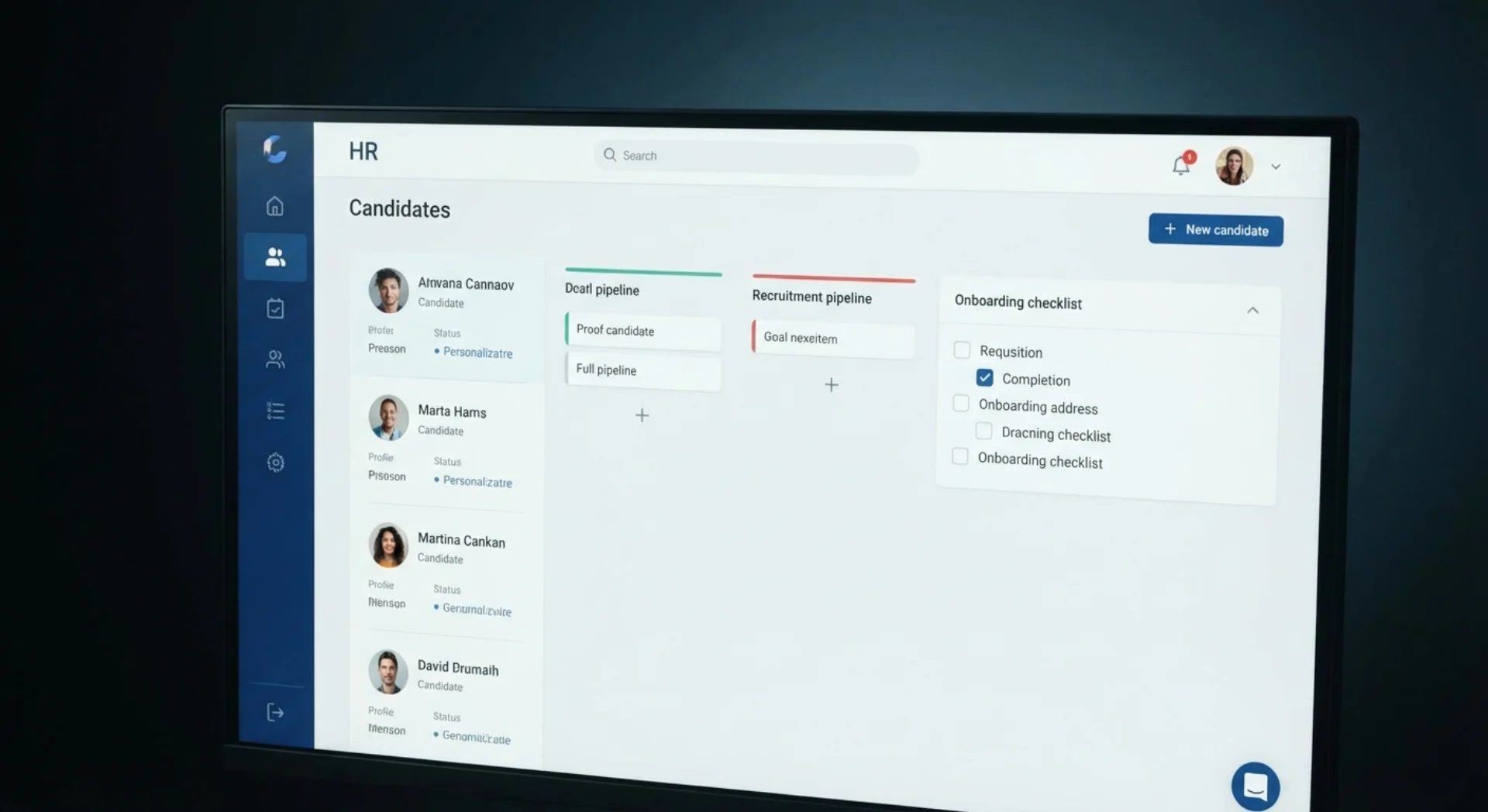
HR & recruiting

Products for candidate search and matching, with transparency, human decisions and compliance with anti-discrimination law.

(06)

AI products: example projects

Examples we can build for you

Software

Vertical SaaS with an AI core

A product for a niche industry automates its central documentation task; the MVP starts with one core feature and grows with feedback from the first customers.

Goal: MVP in about 4–6 weeks · Usage-based pricing · Iterations based on customer feedback
Professional services

A consultancy's knowledge product

A consultancy's methodology becomes an AI assistant that clients can use themselves, with references to the consultancy's content.

From service to product · Source-based answers · Subscription model
Corporate

Corporate venture prototype

An innovation team tests an AI product idea with selected pilot customers and decides on further development based on usage data.

Pilot customers · Measurable criteria · Clear go/no-go decision
(07)

AI products: consulting in Berlin

Founder AI-native since
2024
Email
info [at] contextstudios [dot] ai

Let's get your AI product off the ground

Share your product idea in a 30-minute call, and we will show you the fastest route to validation.