Inventory Management - Context Studios AI Solutions

Inventory Management

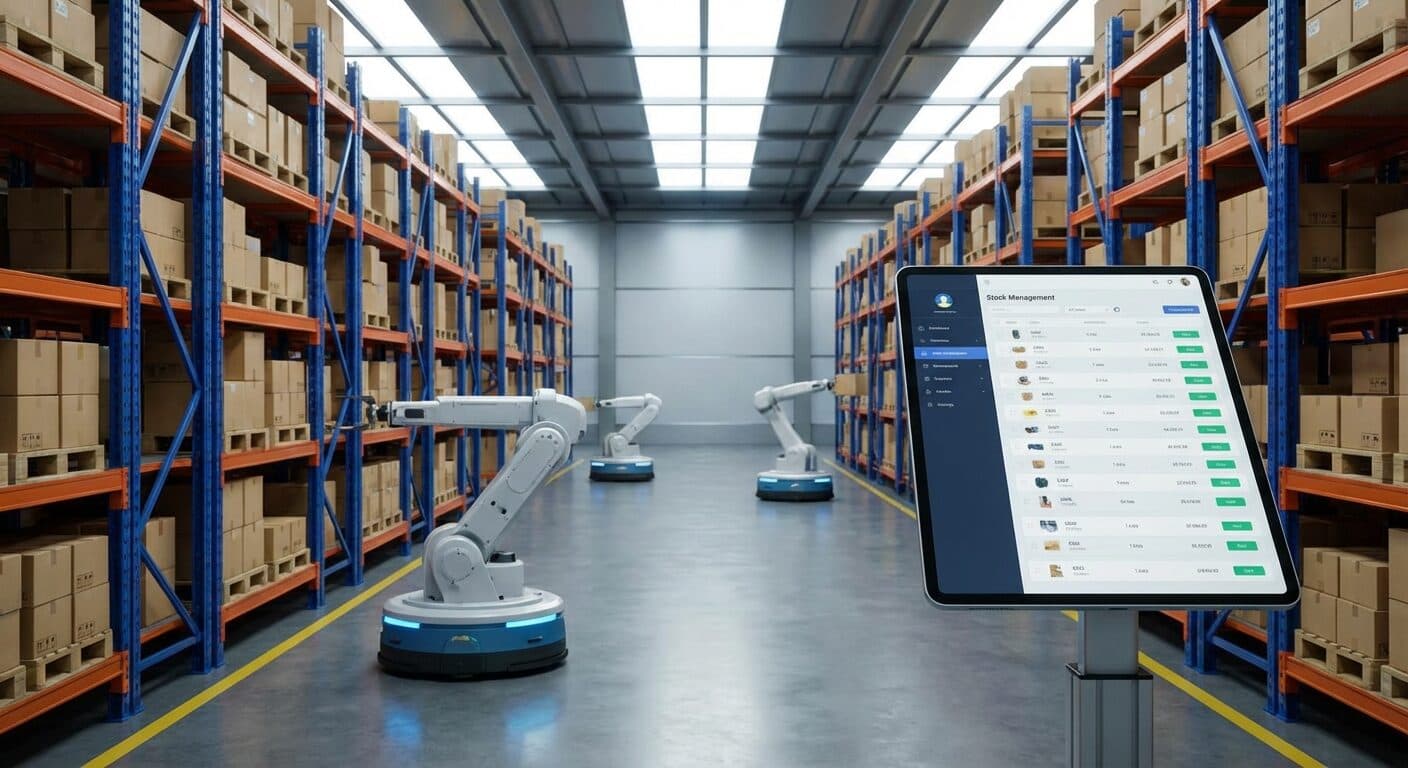
AI-powered inventory that manages itself - predicts demand, prevents stockouts, and automatically reorders while reducing carrying costs by up to 25%

Challenges We Solve

  • Are stockouts causing lost sales?
  • Is overstock tying up valuable capital?
  • Is manual inventory time-consuming and error-prone?
MVP in 4 weeks
Fast delivery
Full source code
You own everything
14+ days support
After go-live

Possible Solution Approaches

The following solution examples illustrate how digital tools can optimize specific business processes and workflows. Context Studios supports you in developing the right digital solution for your use case.

The following examples serve as inspiration and show the spectrum of possible digital solutions. Each project is individually tailored to your requirements and budget.

Why This Solution is Crucial

Inventory carrying costs eat 20-30% of inventory value annually. Our AI Inventory Manager optimizes every decision. Demand Forecasting uses ML to predict sales by SKU, location, and season with 95%+ accuracy. Auto-Replenishment generates and executes purchase orders at optimal times. Dead Stock Detection identifies slow movers before they become write-offs. Multi-Location Optimization suggests transfers between warehouses. Supplier Risk Monitoring alerts you to supply chain disruptions. The result: reduce stockouts by 50%, cut carrying costs by 25%, and free up working capital.

Market & Trends

AI is transforming inventory from cost center to competitive advantage. Key trends: ML demand forecasting outperforming traditional methods by 30-50%, autonomous replenishment systems that learn and improve, computer vision for automated stock counts, and supply chain AI that predicts disruptions before they impact operations. Businesses still using spreadsheets and gut feel for inventory decisions are being outcompeted by those leveraging AI.

Common Challenges

  • Are stockouts causing lost sales?
  • Is overstock tying up valuable capital?
  • Is manual inventory time-consuming and error-prone?

A professional digital solution addresses these challenges through automation, centralization, and intelligent processes.

Example Features

Precise real-time inventory tracking
Automatic reorder notifications
Management of multiple warehouse locations
Barcode scanner integration
Supplier management and order history
Batch and serial number tracking
Benefits

What You Gain

Discover the benefits of our solution for your business

1

Fewer delivery failures through precise inventory management

2

Cost savings through optimized inventory levels

3

Real-time insight into all inventory

Choose Your Implementation Path

Three proven paths to success - tailored to your requirements

Assessment & Discovery

Week 1-2

Deep analysis of your requirements and system landscape

Stakeholder InterviewsSystem Audit & Gap AnalysisDetailed Requirements Doc

Workshop & Architecture

Week 3-4

Collaborative design and technical architecture planning

Design Thinking WorkshopSolution ArchitecturePrototype & Wireframes

Development Phases

Week 5-12

Iterative development in sprints with regular reviews

Sprint-based DevelopmentBi-weekly Demo & ReviewsContinuous Integration

Testing & QA

Week 13-14

Comprehensive quality assurance and user acceptance testing

Automated Testing SuiteSecurity AuditUser Acceptance Testing

Launch & Scale

Week 15-16

Production launch, training and long-term support

Staged RolloutTeam TrainingSLA-backed Support
Our Development Expertise

How Context Studios Develops Your Solution

Three proven paths - tailored to your requirements

Proven SaaS Tools

HubSpot, Notion, Airtable, Make & more

Custom Configuration

Tailored to your processes

Workflow Automation

Reduce manual work by 80%

Quick Start

Ready in 1-2 weeks

No Development Risk

Proven tools instead of custom code

Training & Support

Your team gets trained and supported

You might also be interested in

Discover related topics and solutions for your requirements

Frequently Asked Questions

Answers to the most important questions about implementation

Our AI analyzes your historical data to build custom models specific to your business. It learns patterns, preferences, and behaviors unique to your operations—continuously improving accuracy as you use the system. Your data never trains shared models.

Absolutely. You can begin with core functionality and enable AI features gradually as you become comfortable. AI capabilities are modular—turn them on when ready, no migration required.

AI suggestions are always reviewable—you maintain final control. The system includes feedback mechanisms so it learns from corrections. Confidence thresholds let you auto-approve high-certainty actions while flagging edge cases for human review.

Optimal inventory requires balancing service levels against carrying costs: (1) Safety stock - buffer for demand variability and lead time uncertainty. Formula: Safety Stock = Z-score × √(Lead Time × Demand Variance). (2) Reorder point - trigger level for new orders. Formula: ROP = Average Daily Demand × Lead Time + Safety Stock. (3) Economic Order Quantity (EOQ) - optimal order size minimizing total costs. Modern systems calculate these automatically using historical data and adjust dynamically. Key inputs: service level targets (typically 95-99%), supplier lead times, demand patterns, and carrying cost percentage (typically 20-30% of item value annually). We configure your system with appropriate parameters and refine based on actual performance.

Multi-location management requires a unified approach: (1) Central visibility - single dashboard showing stock levels across all warehouses, stores, and in-transit inventory. (2) Location-specific parameters - different safety stocks and reorder points based on local demand patterns. (3) Inter-location transfers - automated transfer suggestions when one location has excess and another has shortage. (4) Demand allocation - intelligent routing of orders to optimal fulfillment location based on stock availability, shipping cost, and delivery speed. (5) Inventory balancing - periodic redistribution to maintain target levels. Technical requirements: real-time sync between locations, robust master data management, and clear ownership rules for shared inventory.

Scanning technology dramatically improves inventory accuracy: (1) Receiving - scan items as they arrive to update stock instantly and validate against purchase orders. (2) Put-away - scan location barcodes to record exactly where items are stored. (3) Picking - scan items during order fulfillment to prevent errors (wrong item, wrong quantity). (4) Cycle counting - regular partial counts to maintain accuracy without full physical inventory. (5) RFID advantages - bulk scanning (200+ items/second), no line-of-sight required, automatic tracking as items move between zones. Implementation: mobile scanners or smartphone apps for flexibility, zone-based RFID readers for high-volume operations. Typical accuracy improvement: from 65-75% to 97-99%+ with proper scanning discipline.

Have more questions? Contact us for personal consultation.

Ready for Inventory Management?

Let's start your digital transformation together

30 minutes free initial consultation • No obligations