(01)How does the AI learn from our data?
Our AI analyzes your historical data to build custom models specific to your business. It learns patterns, preferences, and behaviors unique to your operations—continuously improving accuracy as you use the system. Your data never trains shared models.
(02)Can we start without AI features and add them later?
Absolutely. You can begin with core functionality and enable AI features gradually as you become comfortable. AI capabilities are modular—turn them on when ready, no migration required.
(03)What happens when the AI makes a mistake?
AI suggestions are always reviewable—you maintain final control. The system includes feedback mechanisms so it learns from corrections. Confidence thresholds let you auto-approve high-certainty actions while flagging edge cases for human review.
(04)What types of content can we deliver through an LMS?
Modern LMS platforms support diverse content formats: (1) Video - recorded lectures, screen captures, animations. (2) Interactive content - SCORM/xAPI packages, HTML5 interactions, branching scenarios. (3) Documents - PDFs, slides, downloadable resources. (4) Assessments - quizzes, exams, assignments with auto-grading. (5) Live sessions - webinar integrations (Zoom, Teams), virtual classrooms. (6) Simulations - software simulations, virtual labs, role-playing exercises. (7) User-generated content - discussion forums, peer assignments, collaborative projects. Content authoring: use built-in tools for simple content or integrate specialized tools (Articulate, Camtasia) for complex interactions. Most organizations blend formats - video for concepts, interactive exercises for practice, assessments for verification.
(05)How do we track learning progress and compliance?
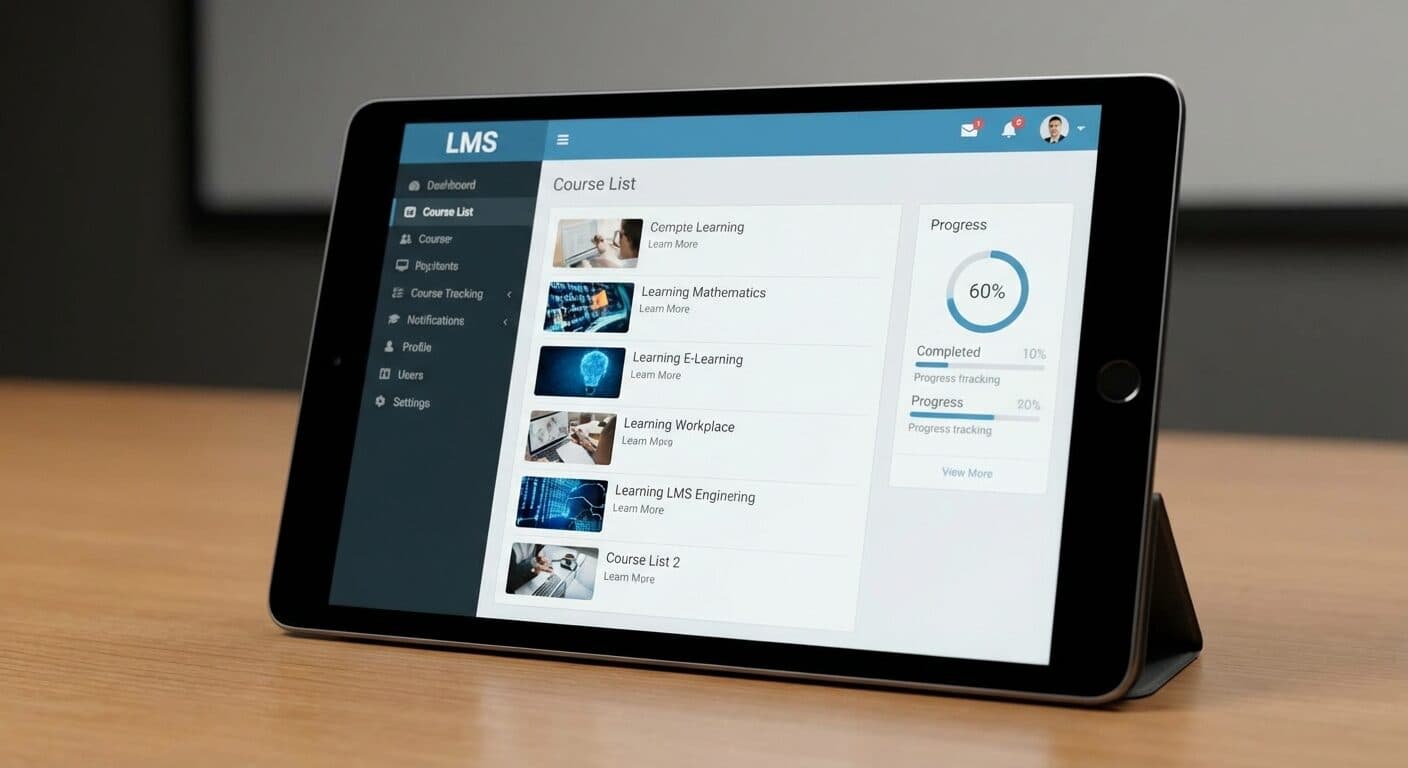
Comprehensive tracking is essential: (1) Completion tracking - course enrollment, progress percentage, completion status with timestamps. (2) Assessment results - quiz scores, passing/failing status, attempts made. (3) Time spent - actual time on content, time to completion. (4) Compliance - certification status, expiration dates, recertification reminders. (5) Skills and competencies - map courses to skills, track skill development over time. (6) Learning paths - progress through multi-course programs. Reporting: role-based dashboards (learner sees their progress, manager sees team progress, L&D sees organization trends). Compliance-critical: automated alerts for expiring certifications, audit-ready reports with completion evidence. Technical: SCORM/xAPI standards ensure consistent tracking across content types.
(06)Should we use Moodle, Docebo, Thinkific, or build custom?
The choice depends on your use case: Moodle is open-source, highly customizable, strong in education - ideal if you have technical resources and need flexibility. Docebo offers AI-powered corporate learning with excellent UX - great for enterprise employee training. Thinkific/Teachable excel at selling courses online - perfect for course businesses or customer education portals. Custom LMS makes sense for: unique pedagogical approaches, deep integration with proprietary systems, compliance requirements not met by standard platforms, or when learning is core to your product. Consider: audience (employees vs. customers vs. students), scale, budget, and internal technical capability. Hybrid approaches also work - standard LMS for core training, custom modules for specialized needs.
Have more questions? Contact us for personal consultation.